
Collaborative and Smart Buildings: The Smart Workplace Tailored to Your Needs
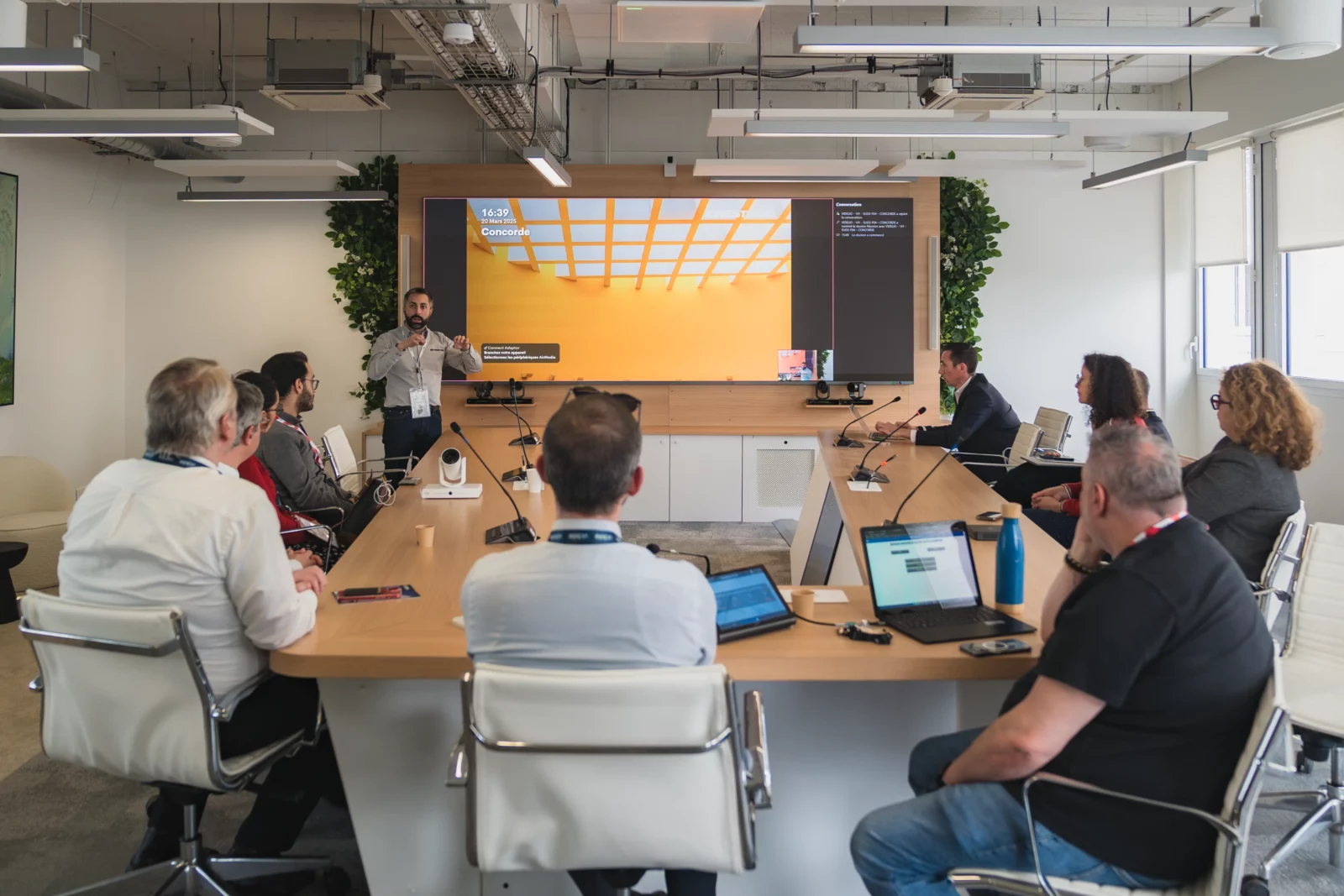
The connected, collaborative building is transforming the management of commercial real estate infrastructure. The shift toward hybrid work models and rising energy costs require dynamic management of workspaces. Centralizing audiovisual protocols, IoT sensors, and building management systems brings isolated devices together into a single network. This approach simplifies maintenance and ensures seamless access to digital services.
Key Challenges of the Collaborative & Smart Building in the Service Sector Workplace
Office building management requires accurate measurement of space utilization. The convergence of audiovisual technology, the IoT, and IP networks provides complete visibility into the status of technical infrastructure.
Unified management to optimize energy efficiency and overall operating costs
Connecting the building’s automation systems to the ventilation, heating, and lighting systems enables dynamic regulation of energy consumption. The sensor network detects actual occupancy in the offices to adjust the operation of technical equipment based on actual needs. This eliminates unnecessary expenses in unoccupied areas and maintains optimal conditions for the teams on site.
This automated management can reduce your electricity bill and extend the lifespan of your equipment. Centralized analysis of energy consumption metrics simplifies tracking your CSR progress and compliance with environmental regulations. You manage the energy efficiency of the smart building through precise monitoring of field data.
Leveraging Building Data to Enhance Occupant Comfort and Quality of Life
Information streams from the building’s systems power digital solutions designed for employees’ daily needs. Employees can identify available spaces using a mobile app or through the digital signage at the reception area. This immediate visibility eliminates search time and simplifies the organization of workdays in a flexible office environment.
Continuous monitoring of environmental factors such as temperature, air quality, and lighting contributes to quality of life in the office. Automatic adjustment of systems to comfort thresholds ensures an environment conducive to collaborative work. Your teams work in a connected, responsive building that adapts its environment to the activities of its smart users.

Alignment with the Smart Buildings Alliance (SBA) and integration with Building Information Modeling (BIM)
The technical architecture of the smart building aligns with the methodological framework promoted by the Smart Buildings Alliance (SBA). The use of open standards and interoperable application interfaces ensures communication between audiovisual equipment, cloud solutions, and building management systems. You protect your investments by avoiding vendor lock-in from a single supplier.
Integration with Building Information Modeling (BIM) allows you to leverage the digital model throughout the building’s lifecycle. Data from BIM provides an accurate map of the wiring, the location of equipment, and the history of technical operations. Your technicians can identify anomalies instantly and perform targeted maintenance tasks.
Smart Control and ShowPilot: Intelligent Control at the Heart of the Collaborative Smart Building
Centralized management of professional environments requires a software infrastructure capable of enabling heterogeneous equipment to interact. The Smart Control approach addresses this technical complexity by consolidating protocols within a single application architecture.
A single platform for building management, technical monitoring, and equipment control
The ShowPilot solution brings together control of audiovisual equipment, IT modules, IoT devices, and building management systems within a single administration dashboard. IT teams can remotely monitor the entire system and immediately detect malfunctions. This real-time visibility speeds up the resolution of technical alerts before meetings begin.
Automated operational workflows simplify the setup of conference rooms. Screens power on, microphones are configured, and lighting is adjusted as soon as occupancy is detected. This process minimizes the need for manual intervention when operating the equipment.
Cloud interoperability, IT security, and protection of users’ personal data
The software architecture ensures direct compatibility with the Microsoft Teams, Google Workspace, and Webex collaboration ecosystems. Automatic synchronization of information flows with your cloud tools streamlines the updating of room occupancy schedules.
The deployment of administrative components complies with IT departments’ cybersecurity requirements. Encrypted data transmission and strict access rights management secure corporate networks. The processing of usage metadata ensures employee anonymity in accordance with CNIL and GDPR guidelines.
Audiovisual and Digital Solutions to Transform Your Workspaces
Equipping work environments requires technologies tailored to the variety of daily uses. The integration of connected audiovisual systems supports teams’ activities at every stage of the day.

IoT sensors, connected devices, digital signage, and service-oriented applications for the flexible office
IoT sensors positioned under desks or on the ceiling measure actual space occupancy. Connected devices transmit changes in occupancy to the central system without infringing on privacy. Digital signage displays messages from management in high-traffic areas or indicates room availability at the entrances to each floor.
Service apps installed on employees’ smartphones centralize access to office services. With a simple gesture, users can reserve an available workstation, request a repair, or order audiovisual equipment. This flexibility enhances the appeal of modern office spaces.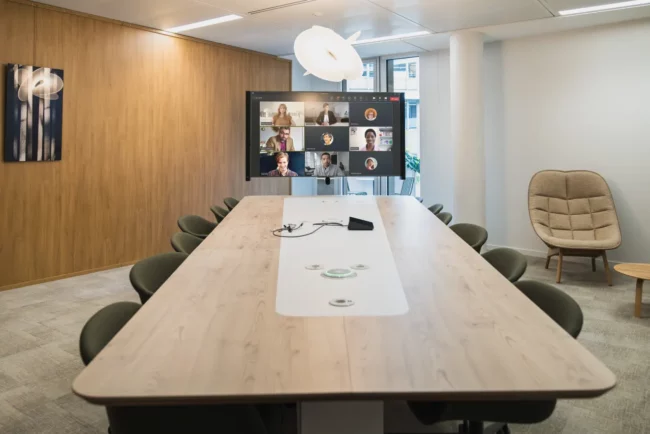
Meeting rooms, collaborative workspaces, and critical control rooms: ensuring a high level of availability
The smooth operation of audiovisual systems is essential to the effectiveness of remote communication. Meeting rooms are equipped with smart videoconferencing bars, ceiling-mounted microphones, and interactive touchscreens. The ease of connection allows hybrid sessions to begin immediately without any technical delays.
Critical environments require absolute reliability of information flows. The integration of an Agelec control room provides operators with high-precision video display on an LED video wall. The hardware and software architecture secures the processing of video feeds to ensure real-time decision-making during emergencies.
Tailored services and support

Audit
and ConsultingOur teams assess your audiovisual equipment, facilities, and usage patterns to anticipate obsolescence, prioritize your investments, and develop a roadmap.

User Support and Staffing
Support, troubleshooting, and on-site technicians: Our teams ensure the safety of your meetings, make it easier to use the equipment, and take the pressure off your in-house staff on a daily basis.

Maintenance and Managed Services
Maintenance, monitoring, and managed services: Our teams anticipate incidents and ensure the continuity of service for your audiovisual equipment.
What You Need to Know About Collaborative Smart Buildings
A connected, collaborative building integrates audiovisual equipment, IoT sensors, and building management systems into a unified environment. This interconnection facilitates the management of spaces, equipment, and usage data.
A monitoring platform like ShowPilot centralizes audiovisual equipment, IoT, and building management systems in a single interface. Teams can view the status of their equipment, detect incidents, and control equipment remotely.
Occupancy sensors measure the actual occupancy of spaces. The systems can then adjust heating, air conditioning, or lighting based on observed usage and reduce energy consumption in unoccupied areas.
Data flows are transmitted via virtual private networks or encrypted cloud connections. Access rights management secures corporate networks, while the processing of usage metadata protects occupants’ data in accordance with the GDPR.
Building Information Modeling, or BIM, provides a digital representation of a building and its technical systems. When used in conjunction with monitoring tools, it makes it easier to locate equipment and perform maintenance tasks.
These solutions are designed to integrate into meeting rooms, collaborative spaces, flexible-office workspaces, and control rooms, among other areas. They make it possible to tailor services and equipment to the actual needs of the occupants.